Sunday, May 20, 2012

Abe Lincoln ... on the wrong side in the "mileage" scandal

As a first-term congressman from Illinois in 1848, Abraham Lincoln found himself on the wrong side of a scandal regarding reimbursement for travel expenses to and from Washington and his home state. To be fair, he broke no laws and wasn’t alone, but the episode reinforced the view of many, even a century and a half ago, that Congress is wasteful and possibly corrupt.

Another new member of Congress at the time was Horace Greeley, editor of the New York Tribune, who was elected to serve only four months at the end of an unexpired term. Greeley soon discovered that in the previous session (during which he was not yet a member himself), almost all members of Congress based their travel expenses on the “usually traveled route,” which was usually much longer than the most-direct mail route – the route between post offices. So for each member of the U.S. House of Representatives and each member of the U.S. Senate, Greeley published in the Tribune the amount of travel funds each received, how much each would have received based on the shortest postal route, and the difference between these two figures.

For his travel expenses to and from his home state and Washington, Lincoln was reportedly reimbursed $1,300.08 for 1,626 miles, or $676.80 more than he would have received for the most-direct route of 780 miles. For the Senate and House together in that session, the total overage came to $62,105.20 for 77,632 miles, the Tribune story concluded. (Curiously, six Congressmen were reimbursed for less than the most-direct postal route for their travels.)

Background information that accompanied the published list in the Tribune was written personally by Greeley and noted that the reimbursements were not illegal, but suggested that the system was highly susceptible to abuse. The “law expressly says that each shall receive eight dollars for every 20 miles traveled in coming to and returning from Congress ‘by the usually traveled’ route, and of course if the route usually traveled from California to Washington is around the Cape Horn – or the members of that Embryo state choose to think that it is – they will each be entitled to charge some $12,000 mileage per session accordingly.”

“We assume that each man has charged precisely what the law allows him … but we insist that the law not continue to allow such charges as these. Is not the distinction a clear one?” Greeley’s article asked.

Many members of Congress were outraged by the publication of the list, and the mileage issue was the talk of Washington – not to mention the chambers of the House and Senate, where discussions became heated – for many days. Greeley biographer Lurton Dunham Ingersoll wrote in his 1873 book The Life of Horace Greeley that the “reform of the law which he had in view was defeated, but ‘the usual routes of travel’ were henceforth very much less ‘circuitous’ than they had been, and some years afterward the rate of mileage was reduced by 50 percent, and constructive mileage utterly prohibited.”


Sunday, May 13, 2012

Charles Dickens on America's “most disgusting” habit

English author Charles Dickens first visited the United States in 1842, and his letters back to friends in Britain offer a fascinating glimpse of American life at that time. Slavery and the pirating of his books among the American population disturbed him greatly, but it was another American practice – tobacco chewing – that drew the greatest amount of his disgust.

In a March letter to Albany Fonblanque, a friend and highly regarded newspaper editor in England, Dickens painted a vivid image about the “prevalence of spit-boxes” and related unsavory issues: 
“They are everywhere. In hospitals, prisons, watch-houses, and courts of law – on the bench, in the witness box, in the jury box, and in the galley; in the stage coach, the steam boat, the rail road car, the hotel, the hall of a private gentleman, and the chamber of Congress; where every two men have one of these conveniences between them – and very unnecessarily, for they flood the carpet, while they talk to you. Of all things in this country, this practice is to me the most insufferable. I can bear anything but filth. I would be content even to live in an atmosphere of spit, if they would but spit clean; but when every man ejects from his mouth that odious, most disgusting, compound of saliva and tobacco, I vow that my stomach revolts, and I cannot endure it. The marble stairs and passages of every handsome public building are polluted with these abominable stains; they are squirted about the base of every column that supports the roof; and they make the floors brown, despite the printed entreaty that visitors will not disfigure them with tobacco spittle. It is the most sickening, beastly, and abominable custom that civilization ever saw.”

This letter and others containing Dickens' impressions of American life in that period are published in The Letters of Charles Dickens - Vol. 3, 1836-1870. He also wrote about his American visit in a book titled American Notes for General Circulation (Cambridge Library Collection - North American History). Both of these sources provide first-person insight, based on an outsider's view of everyday life, that you don't often find recorded.

Saturday, May 5, 2012

President Cleveland's big secret ...

As a severe economic crisis challenged the U.S. in 1893, President Grover Cleveland faced an additional, personal crisis. A sore spot on the roof of his mouth had become more and more painful. His doctor took samples of tissue from the inflamed area he found and sent them – without identifying the source – to two labs for analysis. Both reported the tissue to be cancerous.

“Keeping secrets in the 1890s was easier than it would be a century later, but Cleveland didn’t want to take any chances,” wrote historian H.W. Brands in his 1995 book The Reckless Decade: America in the 1890s. News of the president’s serious health problem could push the nation’s already-teetering economy over the edge, it was feared.

An elaborate plan to hide the president’s surgery was devised. Cleveland quietly left Washington on a train, supposedly to visit his pregnant wife at their summer home in Massachusetts. But instead, he was taken to a yacht on the Hudson River. On that boat, as it sailed in the waters surrounding New York on July 1, a team of surgeons and a dentist began to operate on the president.

The first step was to remove several of the president’s teeth to allow surgeons access to the tumor. Nitrous oxide – “laughing gas” – was used as an anesthetic at first. But when the medical team became concerned that it might be wearing off as the surgery continued longer than expected, ether was administered, putting Cleveland into a much deeper anesthetic sleep. After the tumor was extracted, the golf-ball sized hole was packed with gauze and the president was sent to private room to recover on the yacht.

One day later, Cleveland was able to walk in his room, but remained below deck to avoid being seen. Security became an increasing concern, however, when the medical team’s dentist – Dr. Ferdinand Hasbrouck – left the yacht to perform a previously scheduled surgery on another patient. Rumors about the president’s health had already arisen, and he was brought ashore to his Massachusetts summer home on July 5. There, a presidential aide responded newsmen’s inquiries, saying only that Cleveland had an infected tooth that had been removed.

The president spent four weeks recuperating at his residence. During this period, a special rubber plug was inserted into the hole on the roof of his mouth. It prevented food particles from entering the incision and helped restore the fullness of Cleveland’s face, Brands wrote in his book.

Rumors about the president’s health gathered strength. Speaking to a colleague, Dr. Hasbrouck casually mentioned his service to the president, and the colleague mentioned the story to a friend who was a reporter for the Philadelphia newspaper. The reporter then went to Hasbrouck, telling him that he had the story but just needed a few more details, thereby duping the dentist into telling all that he knew.  But when the reporter then sought insights from the other members of the medical team, they would confirm none of Hasbrouck’s story. Instead, they said that Hasbrouck had screwed up on pulling the president’s bad teeth and had been dismissed. Hasbrouck made up his fantastic story in retaliation, they suggested.


Saturday, April 28, 2012

Painter James Whistler ... a West Point failure

James McNeill Whistler, the American-born but later European-based painter, is best known for the 1871 portrait that is commonly called “Whistler’s Mother.”  His art was recognized internationally with awards and honors during and after his lifetime. But before he focused on his art, his younger life took him down a much different path, including a stint as a cadet at the U.S. Military Academy at West Point.

Whistler’s father, a West Point graduate, was a successful engineer who agreed to help build a railroad in Russia. After his father died of cholera, Whistler and his mother returned to the U.S.  She hoped he would become a minister, but Whistler showed little aptitude or interest in that.  So then, based largely on family connections, Whistler sought and received an appointment to the military academy, which he entered only days before his 17th birthday.

“Whistler took a relaxed view of Academy life,” writes James S. Robbins in Last in Their Class: Custer, Pickett and the Goats of West Point, a 2006 book about the people who finished last in their class at (or as in Whistler’s case, were expelled from) West Point. Whistler’s roommate said that he was “one of the most indolent of mortals. But his was a most charming laziness, always doing that which was most agreeable to others and himself.”

Whistler was intelligent and educated enough to pass most subjects without much work, but his grades and class rank were never high. He preferred to spent time drawing sketches rather than studying. His refusal to take his academic life seriously, his efforts to bend the rules (for example, by keeping his hair longer than it should be), and penchant for smarting off to instructors brought many demerits.

For example, when unable to recall the date of a battle, Whistler was challenged by an instructor who asked him what he would have done, as a “West Point man,” if the question had been asked of him at a dinner party.  “Why, I should refuse to associate myself with people who could talk of such things at dinner,” Whistler responded.

Whistler was rather frail and tended to be sickly, factors which did not bode well for the more physical demands of West Point, such as horsemanship. One day he plunged over his horse’s head, bringing a retort from instructor: “Mr. Whistler, I am pleased to see you for once at the head of your class.”

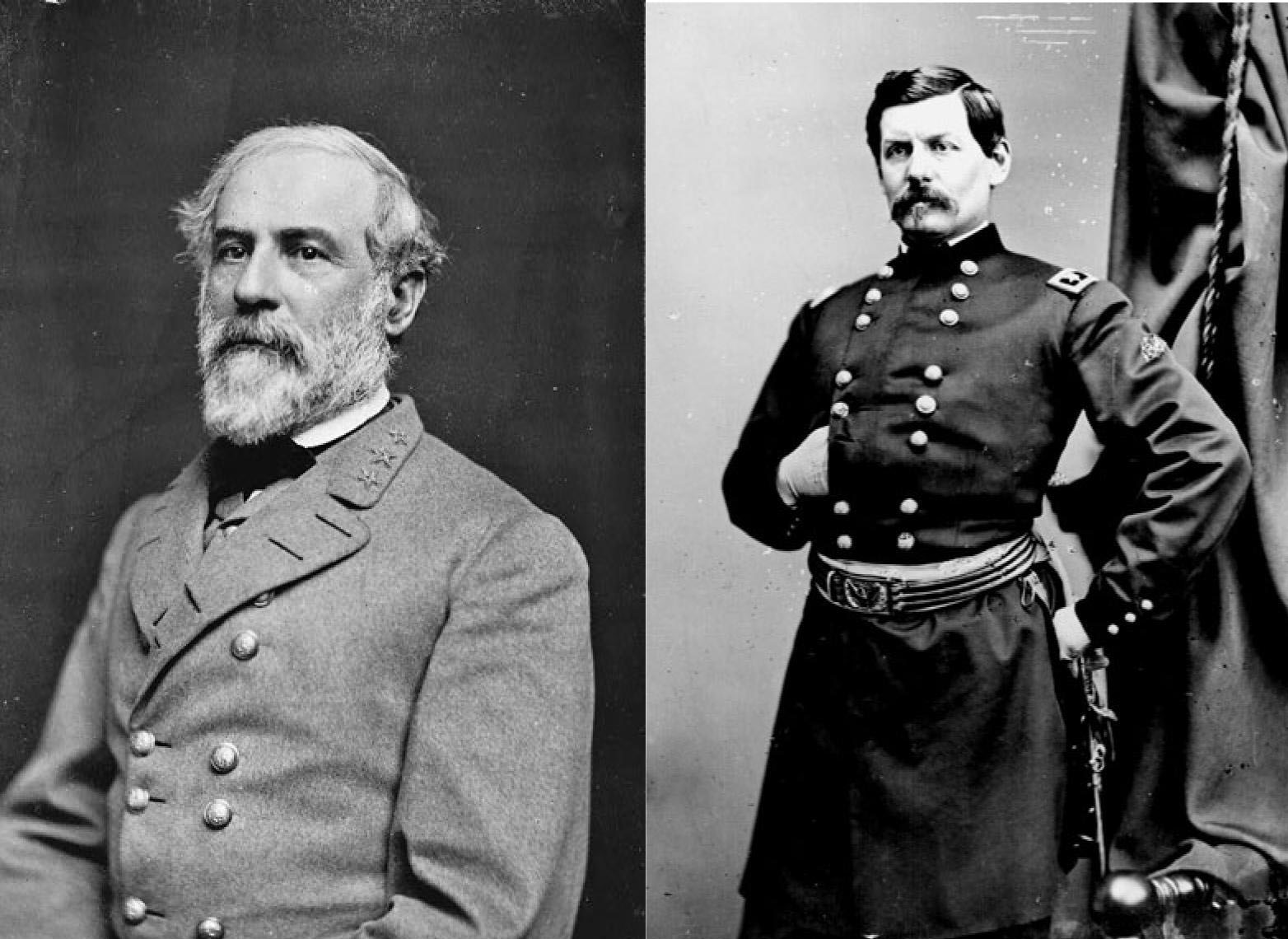
Robbins wrote in his book that Whistler’s offenses “were for the most part not serious – inattentiveness, lateness, carelessness, the kind of thing one would expect.” But the last straw came in his third year, on his chemistry final exam, when asked to discuss “silicon,” a usually solid material that is a primary component of sand. Whistler began his discussion by calling silicon a gas, and his instructor promptly declared Whistler’s knowledge insufficient. After the West Point Academic Board voted to expel him, Whistler appealed. His appeal ultimately reached the West Point superintendent, who was Robert E. Lee, the future Confederate military leader.

A year earlier, Lee had reviewed Whistler’s record when the number of demerits he accumulated reached the point that called for his expulsion. At that time, Lee dismissed demerits for some of Whistler’s less serious offenses, leaving him under the limit and allowing him to continue as a West Point cadet. But now, Whistler had so many demerits that trimming a few made no difference, and Lee signed off on the future world-renown painter’s expulsion from the Academy.

Over the next few years, Whistler bounced around the East Coast before deciding to commit himself to art and moving to France in 1854. There, his career as an artist took off, and he never returned to the U.S. Whistler died in London in 1903.


Saturday, April 21, 2012

The Boston Tea Party ... a result of lower taxes

Taxes were a big issue that led to the Boston Tea Party in December 1773, but not in the way many of us might believe. In fact, a reduction in taxes led to the incident, in which American colonists vaguely disguised as American Indians boarded ships laden with tea and tossed it overboard, into Boston harbor.

The tea was owned by England’s East India Company, which had developed a near-monopoly over England’s trade with other regions of the world by the mid to late 1700s. The British government depended heavily on import and export tariffs generated by trade, so a strong East India Company was vital for England’s well-being. When the company faced financial difficulties in the early 1770s, Britain passed its Tea Act of 1773. The Tea Act allowed the East India Company to ship tea to the American colonies directly from India, without first taking it to England to be sold to middlemen who would then send it to America. The Act also reduced the duty on the company’s tea as it was imported by American colonies.  And too, there’s ample evidence that by reducing the cost of tea legally imported by the Americans, the British also hoped that the colonists would overlook a smaller tax and pay it, thus acknowledging Britain’s right to tax them – which had become a major sticking point in recent years.

As intentioned, the Tea Act lowered the price of the East India Company’s tea in America. The company and the British government expected those lower prices to lead to increased demand, thereby helping to prop up the company and ensure its future contributions to British government coffers. The result was something else, as historian Barbara Tuchman wrote in her 1984 book The March of Folly: From Troy to Vietnam.

The price reduction in the cost of East India Company tea made it less expensive than Dutch tea that was illegally brought to America. That threatened the livelihood of American smugglers, whose illicit activities had reduced by  two-thirds the amount of English tea imported by the colonies.  American merchants who had worked as wholesalers for legally imported English tea were also hurt financially by the Tea Act, which eliminated their middleman role in the trade. Also, many American patriots saw through – with anger – the British ruse to entice colonists to overlook the relatively small tax on the tea and thereby accept it.

Many of the tea-bearing ships arriving at American ports after the Tea Act were turned back, but not in Boston. There, three ships were boarded by “Mohawks,” who tossed tea from 342 chests into the harbor in three hours.

The destruction of the tea enraged even American sympathizers in Britain. The British government responded by closing the port of Boston “to all commerce until indemnity had been paid to the East India Company and reparations to the customs commissioners for damages suffered, and until ‘peace and obedience to the Laws’ was assured sufficiently that trade might be safely carried on and customs duly collected,” writes Tuchman. This and additional strong measures, which in hindsight might be viewed as over-reactions, brought only more American opposition to British rule and tended to unify American colonists. And we know the rest of that story.
 

Saturday, April 14, 2012

Bobby Jones ... sportsmanship at its best

Bobby Jones was one of the best golfers of all time, although he was an amateur, played part-time, and left the game at 28. A lawyer by profession, but with academic degrees in engineering and English literature as well, Jones is best known for his Grand Slam victory in 1930. In that single year, he won all four of the major tournaments of the day and left the game as a player. Later, he co-founded the Augusta National Golf Club in Georgia and its annual Master’s Tournament, developed a set of instructional videos, and designed golfing equipment.

But perhaps Jones’ greatest legacy involves sportsmanship on a level that is almost unheard of – then or now. Competing in the 1925 U.S. Open, Jones’ golf club accidently brushed the ball as he prepared for a shot. He immediately reported the contact and movement – a violation of the rules – to the on-the-scene authorities. None of them had seen the ball move. So they questioned nearby spectators, and none of them had seen it move either. But Jones insisted that he had touched the ball and it had moved, so he assessed himself a one-stroke penalty. He later lost the tournament by one stroke.

After the incident, Jones was angered when people praised his sportsmanship in the matter, wrote author Mark Frost in his 2005 book The Grand Slam: Bobby Jones, America, and the Story of Golf. Rules are rules, Jones believed. “You’d as well praise me for not breaking into banks,” he told a reporter.

Today, the Bob Jones Award is presented annually by the U.S. Golf Association in recognition of good sportsmanship in golf.   

Monday, April 9, 2012

Gangster Clyde Barrow, on Ford cars ...

Clyde Barrow and Bonnie Parker, notorious outlaws who terrorized the American Midwest in the early 1930s, reportedly shot nine law enforcement officers and several others as they robbed banks and small businesses during their crime spree.  That came to an end in May 1934, when both were killed in an ambush set up in Louisiana by lawmen from that state and Texas.

But only six weeks before his death, Barrow purportedly sent a letter to Henry Ford, praising Ford automobiles, especially the V-8 model. The letter, now on display in the Henry Ford Museum in Michigan, is noted in Jeff Guinn's 2010 book Go Down Together: The True, Untold Story of Bonnie and Clyde. Written on April 10, 1934 from Tulsa, Oklahoma, the letter says:

“Dear Sir: -

While I still have got breath in my lungs I will tell you what a dandy car you make. I have drove Fords exclusively when I could get away with one. For sustained speed and freedom from trouble the Ford has got ever other car skinned and even if my business hasen't been strickly legal it don't hurt enything to tell you what a fine car you got in the V8 -

Yours truly
Clyde Champion Barrow”

But is the letter authentic, or is it perhaps the invention of an imaginative public relations effort, or simply a hoax?  You can find historians on all sides of the issue.  Some point out that Barrow’s middle name was “Chestnut,” not “Champion,” but others point out that Barrow wrote Champion as his middle name when he entered prison for a while in 1930. Too, the data and place seem to fit Barrow's whereabouts at the time, and so does the writing style.

Comparisons of the handwriting in this letter with Barrow’s known handwriting are troublesome, though, and suggest that maybe he didn’t write it. In fact, the handwriting in the Barrow-to-Ford letter seems to be a better match for the handwriting of Bonnie Parker, Barrow’s major partner in crime. Could she have written if for him? That’s not a slam dunk either. Although her handwriting seems to suggest some strong similarities to the letter in question, inconsistencies are apparent as well.  See for yourself at Bonnie and Clyde’s Hideout website, which displays the questionable letter and handwriting samples from Barrow and Parker